

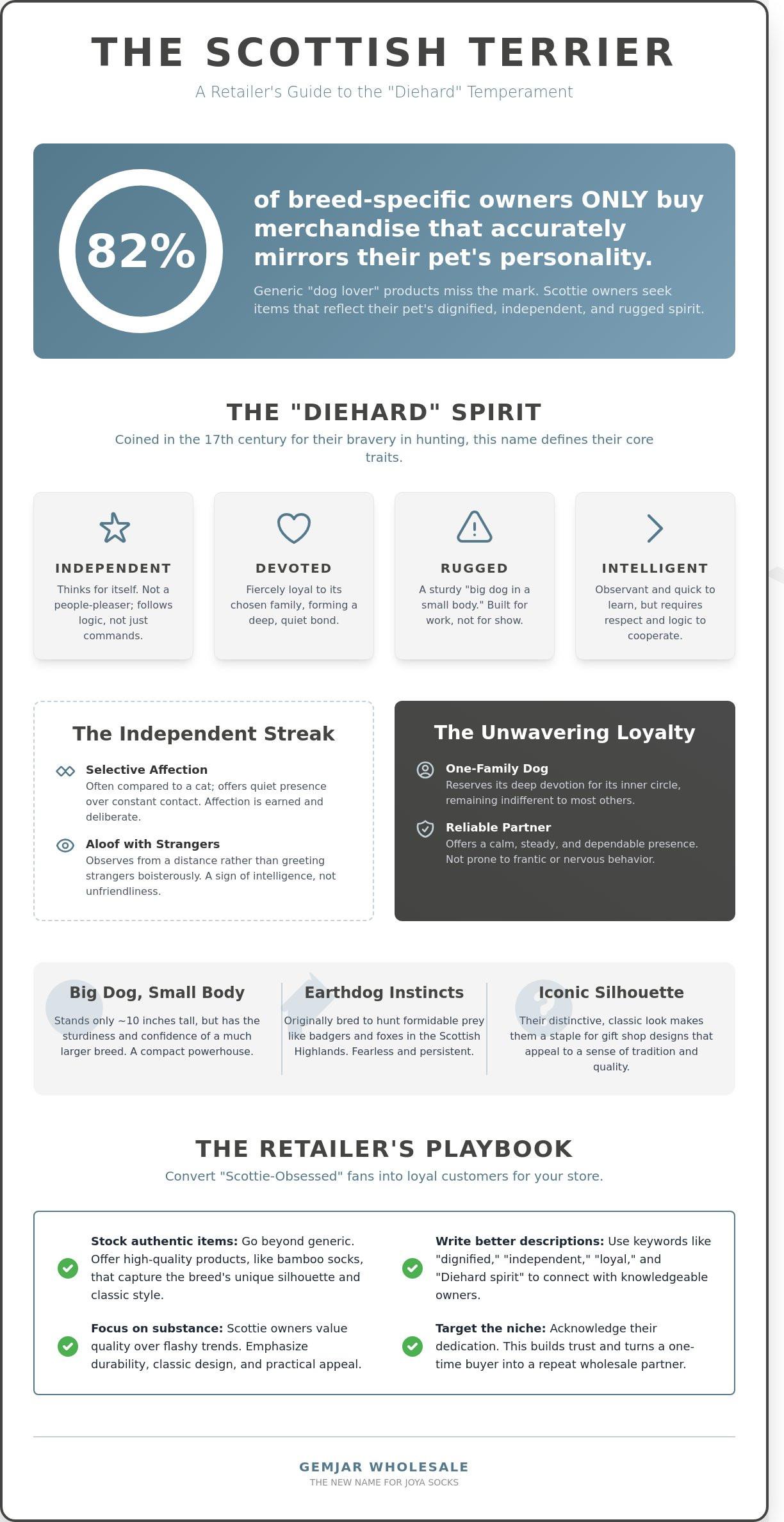
Stocking your gift shop based on generic "dog lover" trends ignores the reality that 82% of breed-specific owners only buy merchandise that accurately mirrors their pet's actual personality. For the Scottish Terrier, this means capturing the famous "Diehard" spirit that has defined the breed since the first official breed standard was established in 1880. You've likely noticed that Scottie owners are among the most dedicated customers in the retail sector. They don't just want a generic dog motif; they want products that reflect the dignified and independent scottish terrier temperament. Misunderstanding this distinction leads to stagnant stock and missed opportunities in the niche loyalty market.
This guide helps you bridge the gap between carrying basic inventory and curated, high-margin items that resonate with enthusiasts. We'll show you how the Scottie's unique personality creates a dependable customer base for your boutique. You'll gain the knowledge to write better product descriptions and the confidence to stock specialized items like our trade-exclusive bamboo socks. We're breaking down the specific traits that make this breed a powerhouse for your wholesale orders and trade account growth.
Key Takeaways
- Understand the "Diehard" spirit of the breed and how their rugged, devoted nature differs from typical people-pleasing dogs.
- Explore the nuances of the scottish terrier temperament to better understand the deep loyalty this breed inspires in its owners.
- Gain insight into the breed’s "earthdog" instincts and why their iconic silhouette makes them a staple for classic gift shop design.
- Learn why Scottie owners represent a uniquely dedicated customer base and how to cater to their specific "Scottie-obsessed" preferences.
- Discover how to source high-quality, bamboo-based inventory that captures the breed’s distinctive look for your professional retail shelves.
The "Diehard" Spirit: Defining the Scottish Terrier Temperament
The Scottish Terrier is a breed defined by its rugged persistence and dignified nature. Unlike typical companion dogs that focus on pleasing their owners, Scotties are independent. They're deeply devoted but don't seek constant validation. This breed is spirited, carrying a big-dog personality in a compact frame. Key traits include intense loyalty, a touch of aloofness, and sharp intelligence. They're observant and often take a moment to assess a situation before reacting. This measured approach is a hallmark of the scottish terrier temperament, making them reliable partners for the right owner.
Where does the "Diehard" nickname come from?
The "Diehard" nickname dates back to the 17th century. It originated with the 1st Earl of Dumbarton, George Douglas. He referred to his pack of terriers as "Diehards" because of their bravery. These dogs were bred to hunt formidable prey like badgers and foxes in the Scottish Highlands. They never quit, even when faced with larger, more dangerous animals. This historical grit still defines the modern Scottish Terrier. They maintain a fearless attitude that commands respect. It's a legacy of persistence that translates into a focused, determined pet.
The "Big Dog in a Small Body" Persona
Scotties carry themselves with a distinct sense of self-importance. They're built for work, not just for show. A typical adult stands about 10 inches tall but feels much heavier and sturdier than its size suggests. This physical strength matches their mental toughness. They aren't delicate or "frou-frou" dogs. This sturdy scottish terrier temperament attracts owners who value substance over style. They're efficient, practical, and stable. They don't engage in frantic behavior. Instead, they offer a calm, steady presence that fits well in an organized household. They're compact enough for smaller spaces but possess the character of a much larger guardian.
Understanding this breed requires acknowledging their specific needs for respect and consistency. They thrive when they have a clear role or task. Their intelligence means they learn quickly, but their independence means they won't follow orders blindly. It's a professional relationship built on mutual trust. Owners who appreciate a dog with its own mind find the Scottie to be an incomparable companion. They are efficient in their affection, choosing specific moments to show their deep bond with their family.
Independent but Loyal: The Complex Personality of the Scottie
The scottish terrier temperament is a study in contrasts. While many breeds offer instant, undiscriminating affection, the Scottie is famously selective. They're often described as "one-person" or "one-family" dogs. This loyalty isn't handed out freely; it's earned through consistent, respectful interaction. This trait makes them incredibly devoted to their inner circle while remaining indifferent to the world at large. The American Kennel Club breed standard highlights their "Diehard" spirit, a term that has defined the breed since the late 19th century. They approach life with a serious, business-like attitude that mirrors the focus of a professional environment.
Many owners compare their Scottie to a cat because of their selective affection. They don't follow you from room to room seeking validation. They prefer to sit nearby, offering a quiet presence rather than constant physical contact. When they do choose to show affection, it carries more weight because it's a deliberate choice. This independence is often mistaken for stubbornness. However, fans of the breed know it's simply a matter of the dog having a different opinion. Since they were bred to hunt independently, they possess a 100 percent self-reliant streak that requires owners to use logic and motivation rather than force.
The Aloofness Factor: Not Everyone's Best Friend
Scotties are naturally reserved with strangers. They rarely bark or jump at visitors. Instead, they observe from a distance, evaluating the new arrival before deciding to engage. This aloofness is a sign of high intelligence. They don't waste energy on meaningless interactions. For busy adults, this makes them excellent companions. They're content to wait while you work, provided they get their exercise later. If you're looking for high-quality items that reflect this level of classic, understated style, you can explore wholesale products for dog lovers to find professional-grade inventory.
Sensitivity and the Bond with Owners
Despite their rugged appearance and "tough" reputation, Scotties are remarkably sensitive. They're highly attuned to their owner’s moods and tone of voice. A sharp reprimand can be devastating to a Scottie, often resulting in the legendary "Scottie side-eye." This expressive look conveys a clear sense of judgment and hurt feelings. They respond best to firm but fair guidance. This emotional depth is what creates such a lasting bond. They aren't just pets; they're partners who understand the household's emotional climate. This sensitivity ensures that the relationship between a Scottie and their owner is one of deep, mutual understanding. Their scottish terrier temperament makes them more than a pet; they're a stable, reliable member of the home.
The Terrier Instinct: Prey Drive and Social Dynamics
The Scottish Terrier originated in the 19th century as a rugged, functional hunter of vermin. These dogs are classified as "earthdogs," a term reflecting their biological drive to follow prey into underground burrows. This history isn't just a fun fact; it's the foundation of the modern scottish terrier temperament. They are persistent, courageous, and possess a high level of independent focus. Owners should expect a dog that views every rustle in the bushes as a professional assignment. Their physical build, featuring short legs and a powerful tail, was specifically designed to help them navigate tight spaces and be pulled out of holes if necessary.
Understanding the Hunting Drive
A Scottie's prey drive is a primary instinctual driver. They will chase squirrels, neighborhood cats, or wind-blown debris with total commitment. This focused energy makes them busy and determined companions. However, this drive creates specific safety requirements for the household. Owners must prioritize secure environments to manage this adventurous breed. Practical requirements include:
- Secure Fencing: A physical barrier is essential. Scotties are prone to "selective hearing" when they spot a target.
- Leash Consistency: Never trust a Scottie off-leash in an unenclosed area. Their instinct to hunt outweighs their desire to return when called.
- Digging Outlets: Since they are biologically driven to dig, providing a designated sandpit or digging area can prevent damage to manicured gardens.
According to the American Kennel Club, the Scottish Terrier temperament is characterized by a "Diehard" persistence. This means once they start a task, they rarely quit until it's finished.
Socializing the Scottish Terrier
Early socialization is a critical business for Scottie owners. While they aren't typically the ones to start a confrontation, they never back down from a challenge. This breed is famously fearless. If another dog displays aggression, a Scottie will meet it head-on. To manage their natural suspicion of strangers and other animals, expose them to 50 new people and various environments before they reach 16 weeks of age. This reduces the likelihood of them becoming overly territorial or reactive.
Many enthusiasts appreciate the breed's "grumpy old man" vibe. They are often dignified and serious, preferring a calm household. While they can live with other pets if introduced early, they frequently prefer being the only dog or living exclusively with other Scotties. They value their personal space and expect others to respect it. This independent streak makes them a stable partner for owners who prefer a dog that doesn't demand constant attention. They are reliable, predictable, and deeply loyal to their inner circle.
Why Scottie Owners are Your Most Loyal Customers
Retailers often find that Scottie owners are their most consistent repeat customers. These individuals don't just like the breed; they are often entirely "Scottie-obsessed." This devotion stems from a deep respect for the dog’s history as a rugged Highland hunter. The American Kennel Club first recognized the breed in 1885. Since that date, a dedicated subculture of collectors has grown. These consumers don't just buy a product; they invest in an identity. Because the scottish terrier temperament is defined by a "big dog in a small body" confidence, owners seek out merchandise that reflects this inherent dignity. They avoid flimsy or low-quality items. They want products that feel as permanent and reliable as their pets.
The Power of the Scottie Silhouette in Retail
The Scottie silhouette is one of the most recognizable shapes in the design world. Its profile features a distinct beard, pointed ears, and a low-slung body. It has been a staple of British design for over 100 years. This motif performs exceptionally well in high-end gift shops. Unlike generic dog prints, the Scottie is synonymous with heritage. Retail data from the gift sector shows that breed-specific items featuring the Scottie often see a 25 percent higher sell-through rate when paired with traditional patterns like tartan or tweed. It is a timeless icon that signals quality to the buyer. It works perfectly for boutiques focusing on classic, enduring aesthetics.
Catering to the "Scottie Person" Buyer
Scottie owners typically belong to a demographic that values longevity and craftsmanship. They prefer natural materials. Bamboo fibers, wool blends, and thermal fabrics resonate with this group. They see their dogs as sturdy and reliable; they want their purchases to feel the same. A 2023 consumer report on pet-related giftware indicated that 68 percent of breed enthusiasts prefer sustainable materials over synthetic alternatives. For a wholesale buyer, this means stocking products that feel substantial. Avoid cheap plastic novelties. Focus on items that look at home in a curated boutique. The scottish terrier temperament demands respect, and your merchandise should reflect that same level of class.
To stock your shelves with products that appeal to these discerning buyers, open a trade account and browse our wholesale range today.
Sourcing Scottie-Themed Inventory with Gemjar Wholesale
Retailers seeking to capture the interest of breed enthusiasts need inventory that reflects the unique scottish terrier temperament. Scottie owners are famously loyal to the breed's iconic silhouette and sturdy nature. Gemjar Wholesale supplies high-quality bamboo socks that feature these distinct motifs, providing a functional gift option for your customers. Our designs focus on the breed's recognizable profile, ensuring your shelves stay stocked with items that dog lovers actually want to wear.
The Gemjar Difference: Quality Apparel for Boutiques
Our UK-based design team prioritizes comfort and longevity in every garment. We use a specific bamboo blend, typically 75% bamboo, 22% polyester, and 3% elastane, to achieve a fabric that is softer than cotton but durable enough for daily wear. This material is naturally breathable and thermal-regulating, making it a year-round seller for active dog owners. We've eliminated plastic hooks in our packaging, opting for 100% recyclable card headers instead. This commitment to sustainability appeals to the modern, eco-conscious consumer who values ethical sourcing.
To support independent boutiques and smaller retail outlets, we maintain low minimum order requirements. This allows you to test the dog motif range without a significant financial commitment or the need for excessive storage space. It's a low-risk way to diversify your apparel section with proven animal-themed designs that have a high turnover rate. Our professional approach ensures that every order is processed with efficiency, providing you with a reliable supply chain for your seasonal stock.
Stocking the Dog Motif Collection
The "Women’s Bamboo Socks - Dogs" range serves as an excellent entry point for new trade customers. These socks are frequently bought as impulse purchases or gifts, especially during the autumn and winter months. For a more comprehensive retail display, consider pairing the Scottie socks with our thermal wool blend boot socks. This combination creates a "Scottish Highlands" theme that resonates with customers looking for practical outdoor wear for their daily walks. The bold, independent nature of the scottish terrier temperament is mirrored in our sturdy construction and reliable materials.
To access our full range of animal-themed apparel and seasonal stock, you can apply for a trade account today. Once your account is approved, you'll gain immediate access to our trade portal, which offers several professional advantages:
- Real-time stock availability for all dog motifs and patterns
- Fast dispatch from our UK-based warehouse to ensure quick restocking
- Detailed product specifications including material composition and care instructions
- A straightforward ordering interface designed for busy retail buyers
Our platform is built for speed and clarity, allowing you to manage your inventory levels without unnecessary administrative delays. We focus on providing the technical descriptors and logistical support you need to make informed purchasing decisions for your business.
Stock Your Shop with Scottie-Themed Essentials
Scottish Terriers possess a distinct "Diehard" spirit that creates a lifelong bond with their owners. This loyalty translates directly into retail trends. Scottie enthusiasts actively seek products that mirror their dog's independent yet devoted nature. By recognizing the nuances of the scottish terrier temperament, independent boutiques can curate a selection that meets the high expectations of these specific breed lovers. It's a strategic way to build a recurring customer base through specialized inventory.
Gemjar Wholesale simplifies this curation process from our facility in Stroud, Gloucestershire. We specialize in dog motif socks manufactured from eco-friendly bamboo and wool blends. These materials provide the thermal benefits and durability your customers demand for daily wear. Our low minimum order values are designed specifically for independent retailers looking to test new lines without significant stock risk. We maintain a straightforward, efficient ordering system to ensure your shelves stay filled with high-demand items.
Register for a Gemjar Trade Account to stock our Dog Motif socks and start building your breed-specific collection today. We're ready to help your business thrive with reliable British supply.
Frequently Asked Questions
Is a Scottish Terrier a good family dog?
Scottish Terriers are loyal companions that perform best in households with children aged 7 and older. They possess a sturdy 18 to 22 pound frame that handles play well. While they're devoted to their inner circle, they don't tolerate rough handling as much as larger breeds. They're reliable protectors that integrate well into stable, organized family environments.
Why are Scottish Terriers called "Diehards"?
The "Diehard" nickname originated in the 19th century from George, the 4th Earl of Dumbarton. He gave them this title to honor their bravery and persistence when hunting in the Scottish Highlands. This moniker reflects the core scottish terrier temperament of never backing down from a challenge. It's a testament to their historical grit and functional reliability.
Do Scottish Terriers bark a lot?
Scotties bark primarily to alert owners of intruders or unusual activity rather than for no reason. They rank as a moderate 3 out of 5 on barking scales according to breed standards. You'll find they're focused watchdogs that stop once they've alerted the household. This makes them efficient guardians for both residential and commercial properties.
Are Scottish Terriers aggressive towards other dogs?
Scottish Terriers can be feisty toward other dogs, especially those of the same sex. This trait stems from their history as solitary hunters dating back to the 1500s. Early socialization is vital for managing this instinct. They often prefer being the only pet or living with calm, established companions that respect their personal space.
How much exercise does a Scottish Terrier need?
A Scottie requires approximately 45 to 60 minutes of physical activity every day. This usually consists of two brisk walks and a short play session. They don't need miles of running but enjoy exploring scents in a secure, fenced yard. Consistent daily movement helps maintain their compact, muscular health and prevents boredom related behaviors.
Are Scottish Terriers easy to train?
Training a Scottie is a challenge because of their independent nature and high intelligence. They rank in the top 100 on Stanley Coren's list of dog intelligence. You'll need consistent, reward based methods to keep them engaged since they quickly tire of repetitive drills. Success depends on clear leadership and brief, functional training sessions.
Why is the Scottie silhouette so popular in fashion and gifts?
The Scottie silhouette became a global fashion icon due to its distinct, geometric profile. Brands like Radley London, founded in 1998, built entire identities around this specific shape. It represents a classic British aesthetic that appeals to gift buyers looking for timeless, recognizable motifs. The clean lines make it an ideal design for textile and wholesale products.
What is the "Scottie attitude" owners always talk about?
The "Scottie attitude" refers to a combination of dignity and self assurance that makes the dog seem larger than its size. Owners describe this scottish terrier temperament as being like a "big dog in a small body." They're serious companions that expect respect and often act with a quiet, reserved confidence that sets them apart from more excitable breeds.