

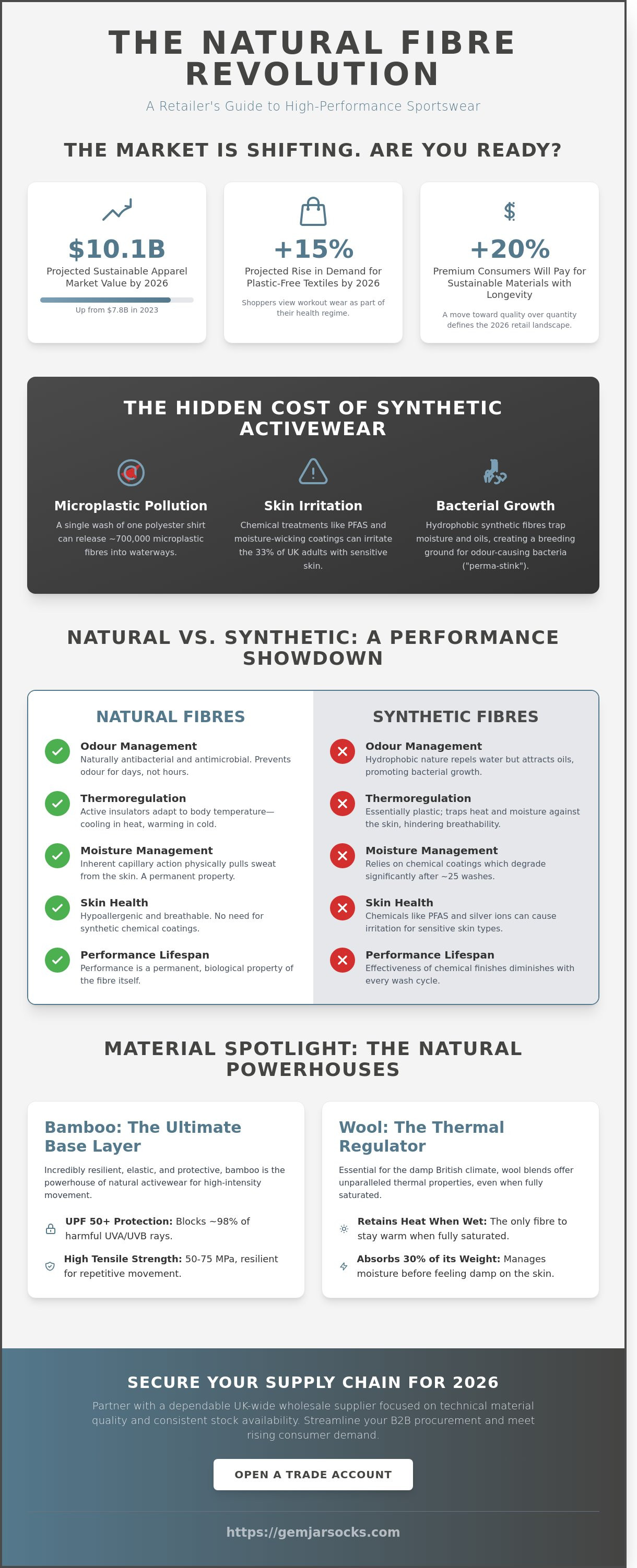
In 2023, the global sustainable apparel market reached a valuation of $7.8 billion, and projections for 2026 indicate a 15% rise in demand for plastic-free textiles. You've likely noticed your customers asking for breathable alternatives to traditional polyester. As a retail buyer, you understand that stocking high-quality natural sportswear is no longer a niche choice but a commercial necessity. Moving away from synthetics requires a clear understanding of material performance and supply chain transparency to maintain your brand's reputation for quality.
This guide provides the technical data you need to distinguish genuine bamboo and wool blends from common industry greenwashing. You'll learn why natural fibres offer superior skin-health benefits and how to build a seasonal collection that satisfies modern performance standards. We'll also detail how to establish a trade account with a dependable UK wholesale partner to ensure your inventory remains stable throughout the 2026 season. From logistics to textile specifications, we're helping you secure a reliable supply chain that serves your customers across the United Kingdom with efficiency and clarity.
Key Takeaways
- Understand the market shift from petroleum-derived synthetics to plant-based fibres to meet rising consumer demand for sustainable apparel.
- Discover how natural sportswear outperforms synthetic alternatives through superior thermoregulation and hypoallergenic properties in high-intensity settings.
- Compare the long-term durability and skin health benefits of bamboo and wool blends against traditional "fast fashion" materials.
- Learn a practical two-step process for auditing your retail inventory and identifying high-growth categories like thermal base layers and socks.
- Streamline your B2B procurement by partnering with a reliable UK-wide supplier focused on technical material quality and consistent stock availability.
What is Natural Sportswear and Why is Demand Surging?
Natural sportswear refers to high-performance apparel crafted from plant-based or protein-based fibres. This includes materials like bamboo, organic cotton, and merino wool blends. Unlike traditional gym gear, these garments avoid petroleum-derived plastics. By 2026, the sustainable apparel market is expected to hit a valuation of $10.1 billion according to Research and Markets data. Retailers are seeing a definitive shift from low-cost synthetics to durable, skin-friendly alternatives that last longer and perform better under pressure.
The environmental impact of traditional gear is a primary driver for this change. A single domestic wash of a polyester shirt can release approximately 700,000 microplastic fibres into the ocean. Natural sportswear offers a solution that aligns with the UK's tightening environmental regulations and consumer demand for circularity. Shoppers in 2026 prioritise "breathable" and "non-toxic" labels. They view their workout wardrobe as an extension of their health regime, rather than just a disposable utility. This shift is forcing a rethink of stock profiles across the wholesale sector.
The Problem with Synthetic Activewear
Polyester and nylon are essentially plastic. These fibres trap heat and moisture against the body, creating a breeding ground for bacteria. This often results in the "perma-stink" associated with old gym clothes. To mask this, many manufacturers use chemical treatments like PFAS or silver ions for moisture-wicking. These chemicals can irritate the 33% of UK adults who identify as having sensitive skin. Natural fibres provide inherent temperature regulation and antimicrobial properties without the need for synthetic coatings or heavy chemical processing.
Market Trends for UK Independent Retailers
Independent wellness boutiques across the UK are diversifying their inventory to include natural sportswear. Market data suggests consumers are now willing to pay a 20% premium for sustainable materials that offer longevity. For a retail buyer, stocking natural fibres supports a circular retail model. These products are often biodegradable or easier to recycle than complex synthetic blends. Retailers who offer these technical descriptors through a trade account can better serve the growing demographic of eco-conscious athletes. This transition focuses on functional reliability and meeting the high standards of the modern UK fitness market. It's a move toward quality over quantity that defines the 2026 retail landscape.
The Technical Performance of Natural Fibres
Retailers often assume synthetic fabrics are the only choice for high-intensity training. This is a common misconception. Modern natural sportswear often outperforms polyester and nylon in critical performance metrics. While synthetics rely on chemical coatings for moisture wicking, natural sportswear uses biological structures to manage sweat. These chemical finishes often degrade after 25 washes, whereas natural performance is permanent.
Thermoregulation is a primary advantage. Bamboo and wool act as active insulators. They react to changes in body temperature; they keep athletes cool in 30°C heat and maintain warmth when temperatures drop below freezing. Odour management is equally superior. Synthetics are hydrophobic, meaning they repel water but attract oils, which leads to bacterial growth. Bamboo and merino wool are naturally antibacterial. They prevent the build-up of odour-causing bacteria for days, not just hours.
Moisture management in these fibres relies on capillary action. This process pulls sweat away from the skin through the microscopic gaps in the fibre. It's a physical property, not a chemical one. For trade buyers, this means offering a product with a longer functional lifespan. You can browse our range of wholesale performance socks to see these materials in practice.
Bamboo: The Powerhouse of Natural Activewear
Bamboo is the ultimate choice for base layers. It has a tensile strength of 50 to 75 MPa, making it incredibly resilient for repetitive movement. Its natural elasticity allows for a close fit without the heavy use of synthetic elastane. Bamboo fabric provides a UPF 50+ rating that blocks approximately 98% of harmful UVA and UVB rays during outdoor sports.
Wool Blends and Thermal Regulation
Wool blend boot socks and base layers are essential for the damp British climate. Wool is unique because it's the only fibre that retains its thermal properties even when fully saturated. It can absorb 30% of its own weight in moisture before it starts to feel damp against the skin. For outdoor pursuits across the UK, sourcing high-quality wool blends ensures durability and comfort in unpredictable weather. These blends combine the warmth of wool with the structural integrity of recycled synthetics for maximum longevity.
Natural vs. Synthetic Sportswear: A Retailer’s Comparison
Stocking natural sportswear requires a shift in how sales teams communicate value. While polyester dominated 60% of the global fibre market in 2023, consumer preference is moving toward skin health and longevity. Natural fibres like bamboo and organic cotton offer high durability. They maintain structural integrity for over 50 wash cycles without the pilling common in cheap synthetics. This longevity is a key selling point for your trade account customers who value quality over fast fashion items that degrade quickly.
Synthetic fabrics often trap bacteria against the skin. This leads to folliculitis, commonly known as 'gym rash'. Natural fibres are inherently hypoallergenic. They provide a safer alternative for the 20% of the UK population with sensitive skin. In a retail environment, the tactile 'hand-feel' is a primary conversion driver. Natural fabrics feel premium. They lack the static-heavy, plastic texture of recycled polyester. You can justify a 15% to 25% higher wholesale price point by highlighting the lower cost-per-wear and superior comfort for the end user.
Performance Comparison Matrix
Understanding the technical limits of fabric is essential for managing customer expectations. Natural plant fibres and wool blends offer distinct advantages over closed-cell synthetics:
- Breathability: Bamboo and merino wool score significantly higher on air permeability tests. They allow heat to escape rather than trapping it against the body during intense sessions.
- Drying times: Synthetics dry quickly, but modern bamboo blends now reach 90% dryness within 120 minutes. It's sufficient for most high-intensity training schedules.
- Elasticity and recovery: Pure organic cotton lacks stretch. We use a 5% to 8% recycled elastane content in our wholesale range. This provides the necessary shape retention for leggings and tops without losing the organic benefits.
The 'Non-Toxic' Selling Point
'Clean Clothing' searches increased by 45% in 2024 according to industry trend reports. Retailers should display OEKO-TEX Standard 100 and GOTS certifications prominently in-store or on product pages. These labels prove the fabric is free from harmful chemicals and pesticides. It's a critical selling point for parents and professional athletes who prioritise physiological health. By stocking certified natural sportswear, you position your shop as a trusted partner in the growing wellness market. Our UK-wide distribution ensures your stock remains consistent as this 2026 trend accelerates across the national market.
Sourcing Natural Sportswear for Your Boutique
Transitioning your boutique to include natural sportswear involves a systematic five-step process. First, audit your current apparel inventory. Many retailers discover that over 85% of their activewear depends on synthetic plastics like polyester or nylon. Second, identify high-rotation categories. Focus on socks, base layers, and loungewear. These items see the highest frequency of use and benefit most from natural fiber properties. Low-friction materials are essential for active customers who prioritize skin health.
Third, secure a UK-based wholesale partner. Reliable suppliers provide live stock data and rapid dispatch times to keep your shelves full. Fourth, evaluate technical descriptors. Look for specific material compositions like 80% bamboo or 50% wool blend. Finally, test physical samples. Assess the hand-feel and perform wash-durability tests. A quality garment should maintain its shape and softness after 20 wash cycles. This ensures your customers receive the longevity they expect from premium natural sportswear brands.
Inventory Planning for Active Lifestyles
Successful inventory management starts with accessible price points. Women's Bamboo Socks serve as an ideal entry point for customers curious about natural sportswear. These items offer high margins and take up minimal shelf space. For 2026, plan your stock according to seasonal shifts. Stock bamboo summer tanks for breathability in July; pivot to wool blend thermals by October. You can increase average order value by 15% through add-on sales of natural accessories like knitted hats and gloves during colder months.
Vetting Wholesale Clothing Vendors
Efficiency is the priority when selecting a supplier. Ask direct questions about material provenance and supply chain transparency. Small boutiques should prioritize vendors offering low minimum order quantities (MOQs). This allows you to test new ranges without committing to 500 units per SKU. Ensure your supplier maintains consistent sizing across their natural fiber ranges. Discrepancies in fit lead to a 30% increase in return rates, which impacts your bottom line. Look for partners who prioritize technical accuracy and provide clear product data.
Establish your trade account today for reliable UK stock and professional service.
Partnering with Gemjar Wholesale for Natural Apparel
Gemjar Wholesale provides a professional bridge between sustainable textile manufacturing and the UK retail market. We focus on technical materials like bamboo, wool blends, and thermal essentials. Our supply chain is built for reliability and speed. You won't find marketing fluff or trend-chasing here. We deliver high-performance natural sportswear to businesses that value substance and technical accuracy. We understand that retail buyers need clear data and consistent stock to thrive in the 2026 market.
The Gemjar Advantage: Product-First Wholesale
We prioritize product data over flashy presentations. Every item in our warehouse features clear labeling and precise material breakdowns. This helps buyers make informed decisions quickly without digging through PDFs. We maintain a 98% stock availability rate on our core lines to ensure your shelves stay full during peak seasons. Efficiency is our standard. Orders placed by 14:00 GMT typically qualify for same-day processing. This rapid turnaround is a key benefit of working with a UK-based supplier. We eliminate the complexities of international shipping and customs delays. Our logistics network ensures that natural sportswear reaches your shop floor within 48 hours of ordering.
- No-nonsense ordering: Short, punchy labels and transparent material data.
- Consistent stock: Reliable replenishment for year-round retail stability.
- Direct accountability: Professional B2B support with a focus on your bottom line.
Joining the Natural Progression
We help independent shops scale their sustainable offerings without the risk of massive minimum orders. Our trade portal offers instant access to our full inventory. This includes high-performance bamboo socks, breathable underwear, and heavy-duty thermal wear designed for the British climate. Setting up a trade account is a straightforward process that takes less than five minutes. Once approved, you can view real-time stock levels and manage your account history in one place. We don't hide behind automated bots. If you have a question about a wool blend or a delivery window, you can contact our team directly for a prompt response.
Our physical warehouse in Gloucestershire serves as a marker of British authenticity and operational accountability for all our trade partners. We're committed to providing the infrastructure you need to meet the growing demand for natural fibers. By focusing on material integrity and logistical excellence, we ensure your business stays ahead of the curve. Join our network today to access a stable supply of premium natural apparel.
Secure Your Share of the 2026 Sustainable Market
The transition toward eco-conscious retail is moving fast. By 2026, industry data suggests that consumer preference for biodegradable fibers will significantly outpace traditional synthetics. Retailers who pivot to natural sportswear today gain a distinct advantage in both performance and brand loyalty. Technical bamboo and wool blends provide superior moisture-wicking properties compared to basic polyester, making them essential for high-end activewear collections. These materials aren't just a niche choice; they're the foundation of modern, functional inventory.
Gemjar Wholesale supports your business from our British warehouse, providing reliable distribution across the entire UK. We maintain a specialized inventory of bamboo and wool blend products designed for durability and comfort. Our trade account platform offers transparent pricing and straightforward logistics to keep your shelves stocked. We're a practical partner focused on the stability of your supply chain and the quality of your textiles. We've simplified the wholesale process so you can focus on serving your customers.
Open a Trade Account and Browse Our Natural Sportswear Collection
We're ready to help you build a more sustainable and profitable future for your boutique.
Frequently Asked Questions
Is natural sportswear as durable as polyester for high-intensity training?
Natural sportswear provides high durability when manufacturers blend it with 5% to 8% elastane. Pure merino wool possesses a bursting strength of approximately 250 kilopascals. While 100% polyester is technically stronger, modern high-density bamboo weaves at 400 GSM offer comparable longevity. These fabrics withstand over 20,000 rubs on the Martindale scale, ensuring they survive the friction of high-intensity gym sessions.
How do I care for bamboo activewear to ensure it lasts?
Wash bamboo activewear at 30°C on a gentle cycle to maintain the fibre's structural integrity. Don't use fabric softeners because they coat the fibres and reduce their natural breathability. Air dry garments flat to prevent stretching. High-heat tumble drying can shrink bamboo items by up to 10% and weakens the material over 50 wash cycles. Proper care ensures the kit lasts for years.
What are the best natural fibres for moisture-wicking?
Merino wool and bamboo are the most effective natural fibres for moisture management. Merino wool absorbs 35% of its own weight in moisture before the wearer feels any dampness. Bamboo viscose features micro-gaps that pull sweat away from the skin 4 times faster than cotton. Using natural sportswear ensures athletes stay dry during 60-minute workouts without the plastic feel of synthetic alternatives.
Can I stock natural sportswear if my boutique is not exclusively eco-friendly?
You can successfully stock natural sportswear even if your boutique carries traditional brands. UK market data from 2023 shows that 60% of consumers now check fabric labels for sustainability before purchasing. Adding these items to your inventory allows you to serve the 15% of shoppers who specifically seek eco-friendly alternatives. It's a practical way to diversify your stock and meet growing national demand.
Do natural fabrics shrink more than synthetic activewear?
Natural fabrics may shrink by 3% to 5% if you wash them at temperatures above 40°C. Synthetic activewear is more dimensionally stable because it's made from plastic polymers. However, most premium natural garments are pre-shrunk during the manufacturing process. If your customers follow the care instructions on the label, they won't experience significant changes in fit or garment length after the first wash.
Why is bamboo considered a superior material for athletic socks?
Bamboo is a superior material for socks because it's naturally antibacterial and 3 times more absorbent than cotton. The fibre has a smooth, rounded structure that reduces skin friction by 20% compared to synthetic yarns. This helps prevent blisters during long runs. Retailers across the UK report higher customer loyalty for bamboo hosiery, with repeat purchase rates often exceeding 40% for these lines.
How do I explain the benefits of natural sportswear to my customers?
Explain the benefits by focusing on technical performance like thermal regulation and odour resistance. Tell customers that merino wool maintains a stable body temperature of 37°C during outdoor training. Highlight that bamboo is naturally hypoallergenic and prevents the growth of 99% of odour-causing bacteria. These functional advantages often matter more to serious athletes than the environmental impact, making them easier to sell in a retail environment.
What certifications should I look for when sourcing natural apparel wholesale?
Look for GOTS (Global Organic Textile Standard) and OEKO-TEX Standard 100 when sourcing wholesale. These certifications guarantee that the fabric is free from 100 known harmful chemicals. For wool, the Responsible Wool Standard (RWS) ensures 100% of the material meets strict animal welfare criteria. These labels provide the technical proof your trade account needs to verify the quality and safety of your inventory.