

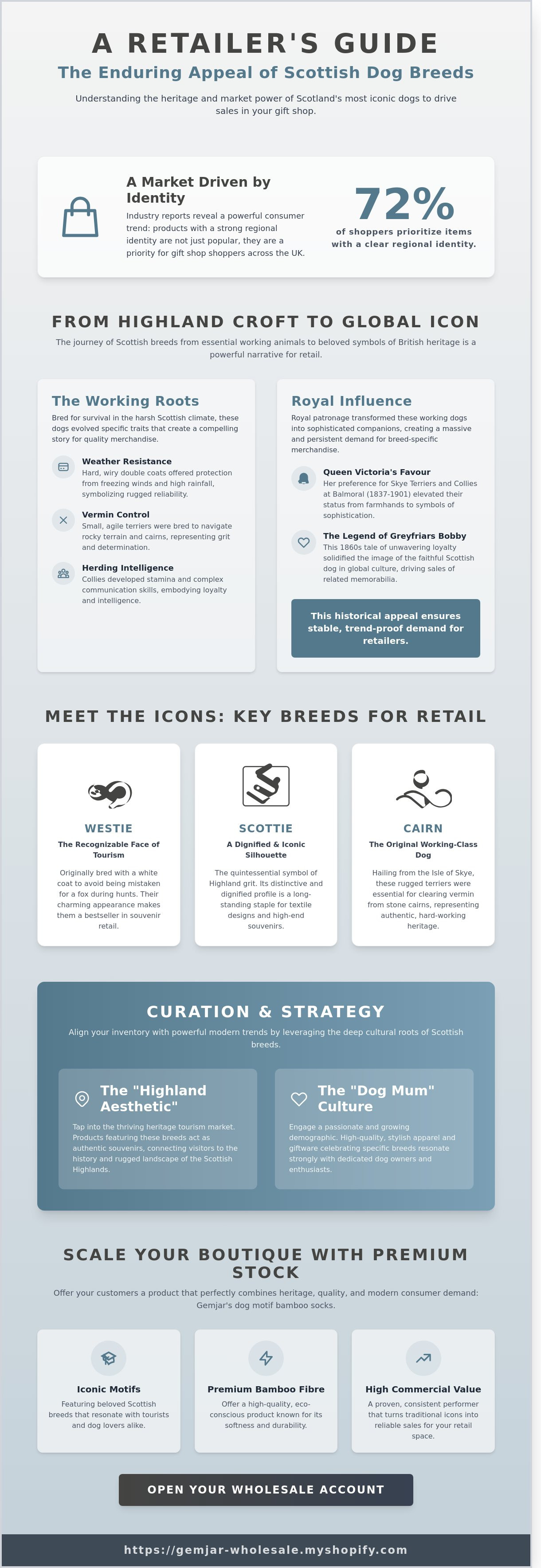
According to The Kennel Club’s 2023 registration data, the Golden Retriever, which originated in the Scottish Highlands in 1868, remains the UK's second most popular breed. This historical connection makes scottish dog breeds a primary driver for heritage-based retail, especially since industry reports suggest that 72% of UK gift shop shoppers prioritize items with a clear regional identity. You already know that authentic Highland themes sell well; however, distinguishing between five different terrier types often creates confusion when you're trying to finalize a seasonal order.
We'll simplify your curation process by providing clear breed histories and specific retail strategies for your inventory. This guide offers a direct look at the most iconic breeds and explains why their cultural history continues to drive modern consumer demand across the country. We've outlined the essential breeds and practical display ideas to help you maximize the value of your wholesale trade account. By the end, you'll have a functional plan to turn these traditional icons into consistent performers for your retail space.
Key Takeaways
- Understand how historical hunting and herding roles established these animals as enduring symbols of British heritage and the Highlands.
- Identify the most popular scottish dog breeds for retail, from the "Big Five" terriers to legendary herding collies.
- Learn to leverage the "Highland Aesthetic" and "Dog Mum" culture to align your gift shop with current heritage tourism trends.
- Gain practical insights on curating breed-themed inventory that matches your specific customer demographics and seasonal sales cycles.
- Discover the commercial advantages of stocking premium bamboo-fibre socks featuring iconic dog motifs for your wholesale trade account.
The Cultural Impact of Scottish Dog Breeds on British Heritage
Understanding the cultural weight of various Scottish dog breeds helps wholesale buyers select inventory that carries genuine heritage. These animals aren't just pets; they served as vital tools for survival in the 18th and 19th centuries. Today, they function as powerful identifiers of national identity for gift shops across the UK. Retailers find that products featuring these dogs resonate with both domestic buyers and international tourists seeking a piece of Highland history.
The transition from the farm to the fashion house has been a steady progression over the last 150 years. What began as a necessity for vermin control or livestock management is now a staple of British textile design and giftware. These breeds represent a specific type of rugged reliability that translates well into high-quality merchandise, from wool blend blankets to thermal apparel. By stocking items that celebrate these animals, businesses tap into a deep-rooted appreciation for British working history.
The Working Roots: Herding and Hunting
Life on a Highland croft required dogs with extreme resilience. The 13 distinct scottish dog breeds recognized today evolved to meet these specific environmental demands. Terriers were bred to navigate rocky terrain and extract vermin from deep cairns, while larger breeds managed vast flocks of sheep across open moors. This practical history provides a rich narrative for retail displays.
The Scottish climate, characterized by high rainfall and freezing winds, necessitated the development of a dense, double-coated fur. This technical evolution ensures that the breeds remain visually distinct in modern product designs. The Scottish Terrier stands as the definitive symbol of Highland grit and unyielding determination.
- Weather Resistance: Hard, wiry outer coats protected dogs from the elements.
- Vermin Control: Small, agile frames allowed terriers to work in tight rock formations.
- Herding Intelligence: Collies were developed for stamina and complex communication with shepherds.
Royal Influence and Global Popularity
Royal patronage accelerated the transition from farmhand to global icon. Queen Victoria’s preference for the Skye Terrier and Collies during her stays at Balmoral between 1837 and 1901 changed public perception significantly. Suddenly, these dogs were seen as sophisticated companions rather than just working livestock. This shift created a massive demand for breed-specific art and ornaments that persists in the wholesale market today.
The story of Greyfriars Bobby in the 1860s solidified the image of the loyal Scottish dog in the global consciousness. This narrative appeal makes these breeds essential for any curated gift collection. Gift shops and souvenir hubs rely on this established loyalty to drive sales of plush toys, apparel, and home accessories. Gemjar provides the reliable stock levels and efficient service needed to meet this consistent demand across the UK. It’s a category that offers stability for retailers, as the popularity of these breeds is rooted in history rather than passing trends.
Profiles of Iconic Scottish Breeds: From Terriers to Collies
Scotland's diverse terrain shaped its native dogs into resilient, functional animals. From the rocky Hebrides to the rolling Borders, these animals were bred for specific tasks. Retailers should recognize that scottish dog breeds represent a major segment of regional gift sales. This group spans from small earth-dogs to large hunters, each carrying a distinct historical narrative that appeals to tourists and dog enthusiasts alike.
The Highland Terriers: Small Dogs with Big Hearts
The West Highland White Terrier, or Westie, is perhaps the most recognizable face of Scottish tourism. Colonel Edward Malcolm of Poltalloch began breeding them for their white coats in the early 1900s. This was a practical choice to ensure they weren't mistaken for foxes during hunts. The Cairn Terrier remains a rugged alternative; it's known as the original working-class dog of the Isle of Skye. These dogs were essential for clearing vermin from stone cairns.
The Scottish Terrier, often called the Scottie, stands out with its dignified profile and wiry coat. Its silhouette is a staple for textile designs and high-end souvenirs. For collectors of rare history, Skye Terrier breed information details a dog once favoured by Mary, Queen of Scots. The Dandie Dinmont Terrier completes the "Big Five" terriers. It features a unique topknot and a name inspired by Sir Walter Scott's 1815 novel, Guy Mannering.
Master Herders of the Borders and Isles
Border Collies are widely accepted as the world's premier herding dogs. A 1994 study by Stanley Coren ranked them as the most intelligent breed based on their ability to learn commands in fewer than five repetitions. They originated in the Anglo-Scottish border regions and remain vital to the UK's agricultural sector. The Shetland Sheepdog, or Sheltie, offers a smaller, refined option. It adapted to the harsh Northern Isles where smaller livestock and limited food required a more compact herder.
The Bearded Collie adds a shaggy, energetic presence to the herding group. Known for the "Highland Bounce," these dogs were traditionally used to drive cattle across the Highlands. Their distinctive long coats make them popular subjects for animated giftware and artistic prints.
Beyond the working dogs, Scotland produced some of the world's most popular aristocrats. The Golden Retriever was developed at the Guisachan estate in 1868. Lord Tweedmouth created the breed by crossing a Yellow Retriever with the now-extinct Tweed Water Spaniel. The Gordon Setter, refined by the 4th Duke of Gordon in the 1820s, represents the peak of Scottish sporting dogs. Finally, the Scottish Deerhound stands as the "Royal Dog of Scotland." In the 16th century, no one below the rank of Earl was permitted to own one. Stocking products that celebrate these lineages allows retailers to connect with specific breed-loyal demographics. You can browse our wholesale collections to find items that feature these iconic animals.
The Highland Aesthetic: Why Scottish Breeds Dominate Gift Trends
Scottish dog breeds offer a visual shorthand for heritage, ruggedness, and loyalty. This makes them essential for UK gift shop inventories. The Fair Isle pattern, which originated in the Shetland Islands, frequently incorporates geometric animal motifs that resonate with tourists seeking authentic mementos. These designs aren't just decorative; they tap into a deep emotional connection. According to the 2023 UK Pet Food report, 31% of UK households now own a dog. This high ownership rate fuels the "Dog Mum" gift market, where buyers look for items that reflect their personal bond with specific breeds.
The psychology of the loyal companion motif is a powerful driver in home decor. Consumers associate these breeds with the stability and warmth of the Scottish Highlands. A 2022 retail survey by Gift Focus highlighted animal-themed textiles as a top five growth category for independent boutiques. Wholesale buyers should note that the most requested motifs currently include the West Highland White Terrier and the Scottish Terrier. These silhouettes are instantly recognizable and translate well across various media, from woven blankets to thermal socks.
Tartan and Terriers: A Classic Pairing
The Scottie and Westie are the most recognized faces on Scottish souvenirs. Their distinct silhouettes work perfectly against traditional tartan backgrounds. Retailers should pair wool blend accessories with breed-specific history in their displays. Mentioning the Scottish Terrier's "Diehard" nickname, coined in the 19th century, adds narrative depth. This storytelling approach increases the perceived value of standard gift items. Using trade-specific displays that highlight material quality, such as wool blend textures, helps justify premium price points to the end consumer.
The Rise of Sustainable Heritage
Modern consumers prioritize material composition over cheap novelty. Plastic trinkets are being replaced by high-quality bamboo and wool items. Bamboo socks featuring scottish dog breeds are currently high-margin pickup items for independent boutiques across the UK. They offer a soft touch and sustainable credentials that appeal to conscious shoppers. These products fit the modern retail profile by being functional, eco-friendly, and easy to ship. Wholesale data shows that small, functional textiles like these have the fastest stock turnover in the gift sector.
- Material Focus: Prioritize bamboo and wool blend fabrics for durability.
- Consumer Trend: Capitalize on the 31% of dog-owning households in the UK.
- Stock Efficiency: Focus on high-margin items like socks and scarves.
- Visual Appeal: Use the iconic silhouettes of scottish dog breeds to attract foot traffic.
Establishing a trade account for these items ensures a steady supply of high-demand motifs. Reliable stock availability is crucial for boutiques during peak tourism seasons. By focusing on technical descriptors like thermal properties and sustainable fibers, retailers can provide clear value to their customers. This professional approach to curation ensures that the Highland aesthetic remains a profitable staple in any retail environment.
Curation Guide: Selecting Breed-Themed Inventory for Your Boutique
Successful retail curation requires a balance between aesthetic appeal and data-driven selection. Retailers across the UK see higher sell-through rates when inventory aligns with regional lifestyle preferences. Stocking products featuring scottish dog breeds allows you to tap into both the pet owner market and the gift-buying demographic. Focus on high-quality materials and clear breed identifiers to ensure products move quickly from the shelf.
Demographic Mapping for Dog Motifs
Target your active, outdoorsy customers by stocking Border Collie and Golden Retriever themes. These breeds represent 15% of the UK's top ten most popular dogs according to 2023 Kennel Club registration data. These customers value utility and durability. For the town and country demographic, focus on the iconic silhouettes of the Scottish Terrier or the Gordon Setter. These motifs signal a sophisticated, heritage-focused style that appeals to traditional gift buyers. Use breed-specific traits in your marketing. Highlight the loyalty of the Terrier or the intelligence of the Collie to create an emotional connection with the shopper.
Inventory Mix: Balancing Novelty and Quality
Maintain a strict ratio of dog-themed items to general heritage stock to avoid a cluttered look. A 20% novelty to 80% core heritage split works best for boutique environments. High-quality bamboo socks serve as the perfect entry-point for these collections. They offer a technical advantage with their moisture-wicking properties and soft handle, making them more than just a visual gimmick. You can easily cross-sell these items with our wider range of Women’s Bamboo Socks to build larger basket values. This approach transitions a single-item purchase into a coordinated gift set.
Seasonal planning is vital for inventory rotation. During the winter months, focus on breeds traditionally associated with the Highlands, such as the Westie or Scottie, often styled with festive or winter accessories. In the summer, pivot toward active "working" breeds that reflect the outdoor walking season. Presentation defines the giftable experience. Use recyclable card headers and minimalist packaging to elevate the product from a basic utility item to a premium gift.
Create a dedicated Scottish Heritage corner in your retail space. Group your scottish dog breeds inventory with complementary textiles like tartan throws or wool-blend accessories. This creates a cohesive narrative that encourages customers to browse the entire range. Keep the display organized by breed or color palette to help busy shoppers find exactly what they need in under 60 seconds.
Ready to update your inventory with high-turnover breed motifs? Apply for a wholesale trade account to access our full collection of bamboo and thermal socks.
Scaling Your Boutique with Gemjar’s Dog Motif Bamboo Socks
Independent gift shops need inventory that combines high sell-through rates with premium quality. Gemjar’s Dogs collection provides exactly this. We offer a range of socks that celebrate popular scottish dog breeds like the West Highland Terrier and the Scottish Terrier. These designs appeal to pet owners and gift buyers alike. They've become a staple for boutiques across the UK. Retailers choose our socks for their technical performance. The bamboo fabric is naturally breathable and antibacterial. It ensures comfort throughout the day for the wearer. This material is significantly softer than standard cotton. It provides a luxury feel that justifies a premium retail price point.
We manage all logistics with efficiency from our central operations. We offer national UK shipping to ensure your shelves stay stocked regardless of your location. Our low minimum order values allow smaller boutiques to trial new designs without heavy upfront investment. This flexibility helps independent shops manage cash flow while diversifying their product range. It's a low-risk way to introduce high-quality textiles to your customers. We prioritize clear communication and reliable stock availability to help you plan your seasonal inventory with confidence.
The Gemjar Quality Standard
Our socks use a specialized bamboo and wool blend. This combination balances durability with softness. We prioritize sustainability by using recycled card labels and plastic-free packaging for every order. Each motif is engineered for high-definition retail appeal. We ensure that the features of various scottish dog breeds are instantly recognizable to customers. This attention to detail reduces returns and builds consumer trust. The reinforced heel and toe areas provide extra longevity. These technical specs are essential for discerning shoppers who value quality over fast fashion.
Become a Gemjar Stockist
Opening a trade account takes less than three minutes. Once registered, you gain access to our full wholesale catalog with UK-wide delivery options. We support our retail partners by providing high-quality imagery for social media and website use. This helps you drive traffic to your store without the cost of professional photography. Our team is available to discuss stock availability and shipping timelines to ensure a smooth partnership. Register for a trade account today to browse our collection and start scaling your boutique’s inventory with reliable, high-demand products.
Elevate Your Boutique Inventory Today
The cultural influence of scottish dog breeds continues to drive significant retail demand across the UK gift market. Integrating these iconic motifs into your shop's collection offers a reliable way to tap into British heritage and customer loyalty. By focusing on high-quality materials like our sustainable bamboo and wool blends, you ensure your boutique stands out for both style and durability. Our 2024 wholesale range is designed to simplify your procurement process while maximizing shelf appeal for your customers.
Gemjar Wholesale supports your growth through efficient UK-wide national wholesale distribution and accessible low minimum order values. We prioritize your time with a direct, no-nonsense approach to trade accounts. Our logistics network ensures consistent stock availability for boutiques in every region of the country. It's easy to refresh your inventory with professional-grade textiles that your customers will value. We look forward to partnering with your business to help you achieve your seasonal sales targets through reliable service and quality products.
Browse our Wholesale Dog Motif Bamboo Socks
Frequently Asked Questions
What are the most popular Scottish dog breeds for gift shop inventory?
The West Highland White Terrier, Scottish Terrier, and Golden Retriever are the most popular scottish dog breeds for gift shop inventory. These three breeds consistently rank in the top 20 of The Kennel Club's annual registration statistics. Retailers find that Westies and Scotties are particularly iconic for heritage-themed products. Their distinct silhouettes make them ideal for textile designs and small gift items.
Is the Golden Retriever actually from Scotland?
The Golden Retriever originated in the Scottish Highlands during the mid-19th century. Dudley Marjoribanks, known as Lord Tweedmouth, developed the breed at his Guisachan estate between 1840 and 1890. He crossed a yellow retriever with the now-extinct Tweed Water Spaniel to create a superior hunting dog. It's now one of the most beloved scottish dog breeds globally.
What is the difference between a Westie and a Scottie?
The primary difference lies in coat color and body shape. Westies have a bright white double coat and a more rounded face. Scottish Terriers, or Scotties, typically feature black, wheaten, or brindle coats with a distinctively long, rectangular profile. The Kennel Club first recognized the Scottie in 1882, while the Westie gained official recognition later in 1907. Both breeds offer high recognition value for retail buyers.
Why is the Scottish Terrier so famous in the UK?
The Scottish Terrier gained immense UK popularity through its selection as a Monopoly game token in 1942. It's also been the face of Black and White whisky since the late 1800s. This breed represents a sense of stoic British character that resonates with tourists and domestic shoppers alike. Its silhouette is a staple in British textile design and home decor.
Are there any rare Scottish dog breeds I should know about?
The Skye Terrier and the Dandie Dinmont Terrier are two rare breeds you should consider for niche collections. The Kennel Club currently lists the Skye Terrier as a Vulnerable Native Breed because it often sees fewer than 75 registrations per year. Including these breeds in your shop's range appeals to breed enthusiasts and collectors. It shows a deeper knowledge of Scottish heritage than standard high-street offerings.
How do I choose the right dog-themed products for my boutique?
Select products based on the 31 percent of UK households that own dogs, according to the 2023 PDSA PAW Report. Prioritize high-quality materials like bamboo or wool blends that offer durability and tactile appeal. Focus on the top five most registered breeds to ensure high stock turnover. This data-driven approach reduces the risk of unsold inventory in your boutique.
Where can I buy wholesale bamboo socks with dog motifs in the UK?
You can buy wholesale bamboo socks with dog motifs directly from Gemjar Wholesale. We provide a streamlined online ordering system for trade accounts across the entire UK. Our inventory includes various Scottish dog breeds designed specifically for the gift and boutique market. We ship daily from our central facility to ensure your shelves stay stocked with high-demand textile items.
What makes bamboo socks better than cotton for gift shops?
Bamboo is superior to cotton because it absorbs 40 percent more moisture and offers natural antibacterial properties. It's a more sustainable textile choice since bamboo grows up to 3 feet per day without pesticides. Gift shop customers prefer the silk-like texture and thermal regulation that bamboo provides. These technical benefits justify a premium position on your retail shelves.